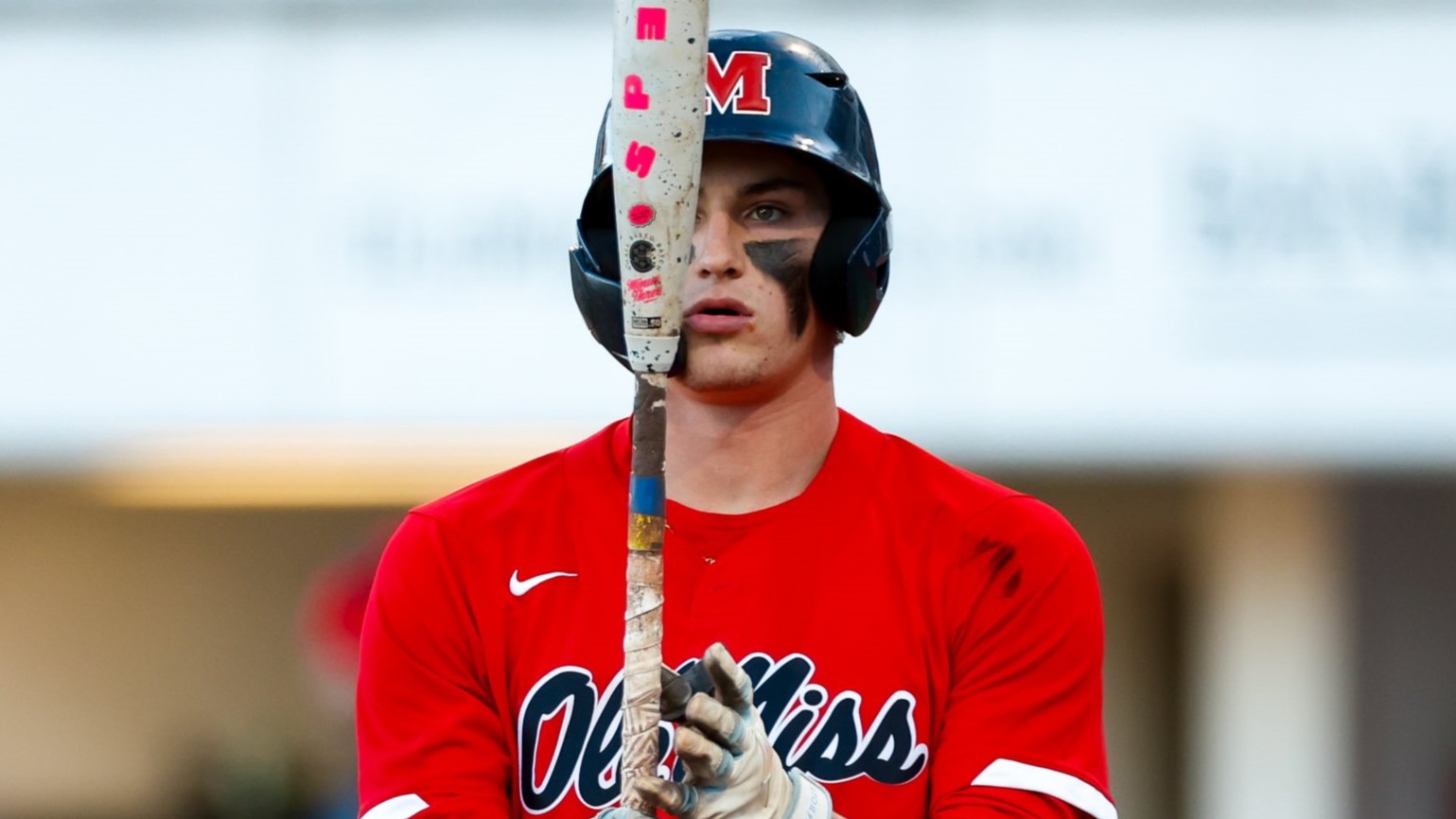
Ole Miss made history last baseball season and it had nothing to do with its trip to the College World Series.
The Rebels and Missouri played the first college baseball game to use the ABS system during the 2026 SEC Tournament in Hoover, Ala. Ole Miss made the first challenge in college baseball history, but it was unsuccessful.
Missouri, meanwhile, successfully overturned seven calls in its 10-8 upset of the Rebels.
Now, with the system coming to college baseball on a broader basis in 2027, Ole Miss coach Mike Bianco knows there’s more to preparing for it than simply learning how it works.
There’s a strategy involved, and the Rebels are still figuring that part out.
“We’ve had some good days and bad days,” Bianco said Monday when asked about the team’s experience with ABS during fall practices. “The Pizza Bowl was probably the worst day. That’s one of the things I think, like everything else, we’ve got to work on a little bit. We can’t just say it will take care of itself because it’s new, and it’s new to everybody.”
The NCAA approved the experimental use of ABS challenges for the 2027 season, following the SEC’s test run during its conference tournament last spring. The technology is permitted where available, with the NCAA’s experimental protocol specifying conference play.
Each team begins a game with three challenges. If a challenge is successful and the call is overturned, the team keeps that challenge. If the original call stands, the team loses one.
Run out of challenges, and you’re out of luck for the remainder of regulation. Teams with no challenges remaining receive one additional challenge in each extra inning, but unused extra-inning challenges don’t carry over.
Only the batter, pitcher or catcher can initiate a challenge, and it must happen immediately after the pitch by tapping the top of their helmet or cap. Coaches aren’t permitted to initiate a challenge or signal a player to make one.
The technology then determines whether the pitch crossed the batter’s electronic strike zone.
On the surface, it all seems fairly straightforward. In actuality, it’s not.
Consider what happened last May. Missouri’s catcher, Mateo Serna, was particularly effective with his challenges against Ole Miss. One overturned call resulted in a called third strike against Austin Fawley with two runners aboard in the fifth inning.
Instead of facing a 3-2 count, Fawley’s at-bat was over.
It was a reminder that one overturned call can have a significant impact on an inning.
And that’s what Bianco is trying to prepare his players for.
“We’ll have to come up with a little bit of a philosophy or system for how we approach it,” Bianco said.
Part of that involves determining which players have the best judgment when it comes to challenging calls.
Some catchers might have a better feel for the strike zone than others. Some hitters might be too quick to challenge a close pitch. And a pitcher who disagrees with every borderline ball call probably isn’t the person you want deciding how to use a limited resource.
There’s also the matter of when those challenges are most valuable. Is it worth risking one in the second inning with nobody on base? Or would that challenge be better saved for a bases-loaded situation in the eighth?
Those are questions Bianco and his staff will have to answer before the season begins.
“I know it’ll be exciting for the fans,” Bianco said. “People see it in the win-loss column, and people are clapping for a ball or strike 45 seconds after the pitch.”
But Bianco sees a much bigger purpose.
“The reason you do it is those things matter. A ball or strike called in the third inning or sixth inning sometimes sways a count one way or the other, which sometimes changes the game.”
Technology has already changed college baseball in numerous ways, from instant replay to advanced player development tools. ABS is simply the latest addition.
And while fans will enjoy seeing the occasional overturned call, the teams that benefit most could be the ones that learn to use their challenges intelligently.
Ole Miss already learned last May that getting those decisions right matters.
Now the Rebels have a few months to make sure they’re better prepared when the next opportunity comes.