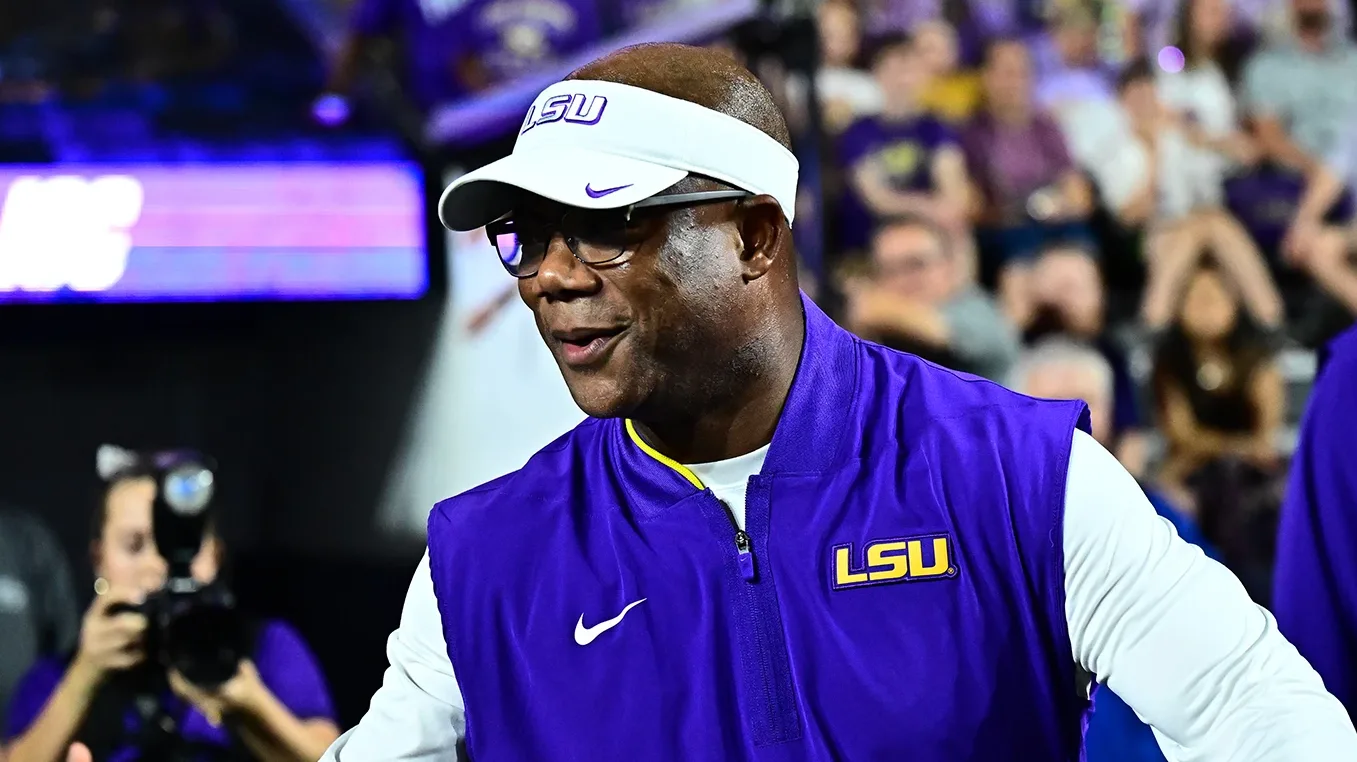
Frank Wilson didn’t leave LSU in the dead of night.
He didn’t sneak out with a playbook under his arm or pretend the last few weeks hadn’t happened.
Instead, he did what longtime SEC assistants usually do when the music stops. He explained himself, calmly, politely, and with just enough honesty to remind everyone how this business really works.
As we’ve seen it’s only head coaches these days that try to slip off without so much as a wave goodbye.
The longtime coach, fresh off serving as LSU’s interim head man, addressed with the media why his next stop is Oxford, not Baton Rouge.
“Coach Kiffin was absolutely awesome the entire time, in wanting to find a way to work it out. We didn’t come to that resolution.”
Frank Wilson on not remaining with @LSUfootball and moving on to @OleMissFB. #LSU @Lane_Kiffin @TexasBowl pic.twitter.com/uIfrALtomr
— Jacques Doucet (@JacquesDoucet) December 26, 2025
His words didn’t sound like bitterness. They sounded like experience. That kind of experience you earn by staying in this league long enough to know the scoreboard doesn’t always decide who stays and who goes.
Wilson made it clear the decision wasn’t rushed. Conversations were had. Options were explored. Possibilities were discussed.
In coaching terms, that usually means everyone shook hands, nodded a lot, and eventually realized the math didn’t add up the same way for both sides.
That’s when reality sets in.
At LSU, Wilson had just finished guiding a program through transition, holding things together after the departure of the head coach.
Interim jobs are funny that way. You’re trusted to steer the ship, but nobody promises you a cabin once the permanent captain arrives.
Wilson acknowledged that the new LSU staff, led by Lane Kiffin, made an effort to see if there was a way forward. He even praised the process.
In this business, that’s about as close as you get to saying, “Nobody did anything wrong, but nobody blinked either.”
When familiar faces matter more than familiar offices
Eventually, another door opened. This one led east, down Highway 6, into a program starting its own reset.
At Ole Miss, the Rebels are now led by Pete Golding, a coach Wilson knows well and trusts deeply.
That relationship mattered. Wilson didn’t dance around it. He talked about respect, shared history, and years of crossing paths long before either man sat in an SEC office with their name on the door.
In a league where trust is currency, Wilson followed what he knew.
He described the move as a fit — not just professionally, but personally. Coaches always say that, but sometimes it’s true.
Oxford offered familiarity without nostalgia, opportunity without pretending the past didn’t exist.
For Ole Miss, Wilson steps into a staff that needs steadiness as much as star power.
The Rebels aren’t rebuilding from rubble, but they are redefining who they are under new leadership.
Adding a veteran coach with deep recruiting roots and SEC scars makes sense, even if it raised eyebrows across state lines.
No villains, just timing
Wilson didn’t take shots at LSU. He didn’t frame the move as unfinished business. If anything, his tone suggested acceptance.
Coaching changes are like weather fronts in the South — you can see them coming, but you never know exactly where they’ll land.
He acknowledged that staying in Baton Rouge was discussed. That matters. It tells you this wasn’t a door slammed shut. It just wasn’t opened wide enough.
And so Wilson looked elsewhere, found a familiar voice on the other end of the phone, and decided it was time to move on.
At Ole Miss, he’s expected to coach running backs and help anchor recruiting efforts.
That’s not glamorous compared to an interim head coaching title, but it’s real work.
It’s the kind of work assistants with long resumes tend to trust more than temporary labels.
The SEC carousel never stops
This move also fits neatly into the larger SEC coaching shuffle, where loyalty is often seasonal and opportunity rarely waits.
One program changes direction, another adjusts its staff, and experienced coaches slide into new roles without pretending the last logo didn’t matter.
Wilson’s explanation sounded less like justification and more like translation — explaining to fans what coaches already know.
This league doesn’t pause for sentiment. It just keeps turning.
For the Rebels, Wilson arrives without needing a honeymoon period. He knows the conference. He knows the recruiting map. He knows the questions that come with switching sidelines.
For LSU, it’s another reminder that interim leadership doesn’t always lead to permanence. Sometimes it just leads to the next chapter somewhere else.
And for Wilson, it’s another stop in a career built on understanding that in the SEC, today’s difficult decision is tomorrow’s normal headline.
Key takeaways
- Frank Wilson said discussions took place about staying at LSU, but no long-term agreement was reached.
- His move to Ole Miss was driven largely by trust and history with Pete Golding.
- The decision reflects how SEC coaching changes often hinge on timing more than loyalty.