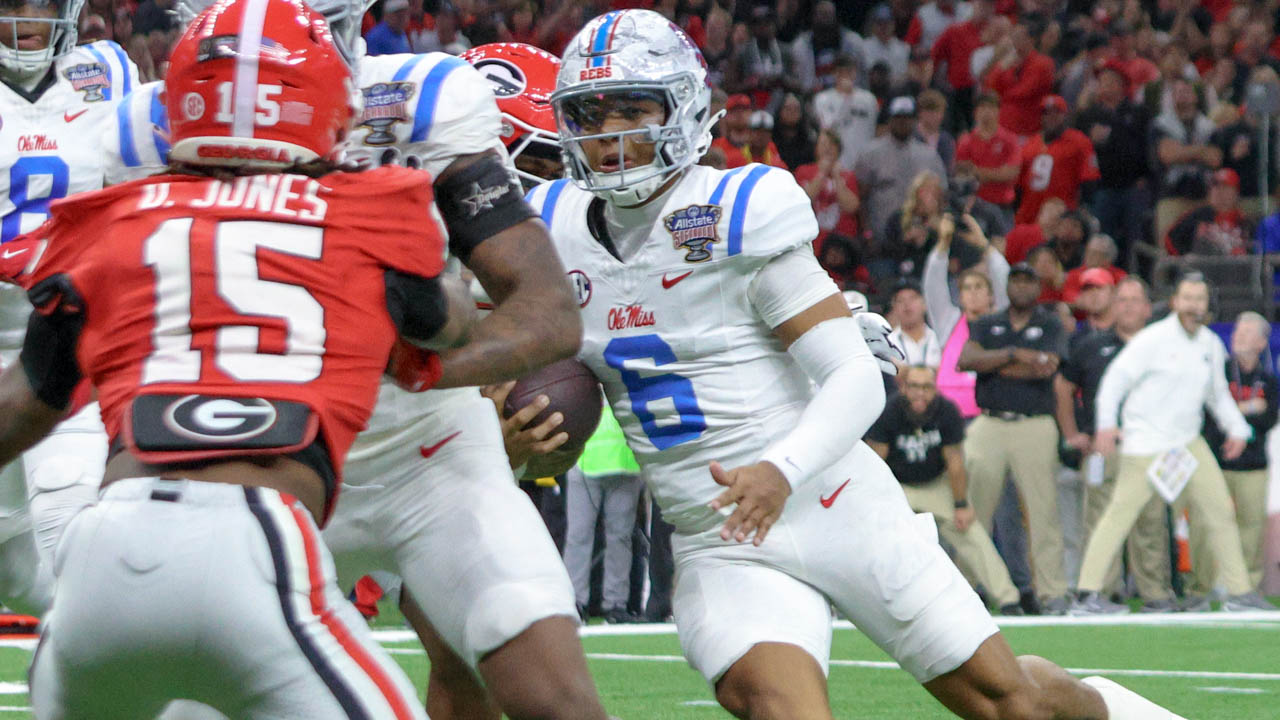
OXFORD, Miss. — Ole Miss fans have a bigger issue this week to think about than Trinidad Chambliss’ issue.
That deal with the kangaroo court desperately trying to remain relevant in college athletics.
The Rebels are facing the Miami Hurricanes on Thursday night in Glendale, Ariz., and they have a legitimate shot at winning a national championship.
We’ll find out about Trinidad’s status soon enough. There are bigger fish to fry right now, though. It’s being handled by the best.
When the NCAA rulebook starts to feel less like a guide and more like a choose-your-own-adventure novel, that’s usually when Tom Mars shows up.
This time, Mars is pushing for another year of eligibility for Chambliss, a case that sits right in the wheelhouse of his long-running skirmishes with college sports bureaucracy.
The goal is simple enough. He’s working to convince the NCAA that Chambliss deserves one more season. The path there, as usual, is anything but simple.
Mars has built a national reputation by doing something the NCAA has never been especially fond of — reading its own rules closely and then asking why they don’t apply the same way twice.
Over the years, he’s taken on waiver denials, eligibility rulings and appeals that often feel more like coin flips than judgments grounded in precedent.
For Ole Miss, the effort is about keeping a quarterback who has invested years in the program from being told the clock simply ran out.
The Rebels’ case rests on participation history, timing, and the maze of eligibility exceptions that expanded and contracted during recent seasons.
Mars has argued in similar situations that athletes should not be punished for administrative delays, shifting interpretations or eligibility rules that changed midstream.
That argument is not new. What’s new is how often it still needs to be made.
For those who may be interested, this excerpt from a second letter that was sent to the NCAA earlier today explains the gist of why the waiver request filed on behalf of Trinidad Chambliss plainly satisfies the requirements of the applicable, legally enforceable @NCAA Bylaw. https://t.co/hXfrwg8QtK pic.twitter.com/F4X1bn18tG
— Tom Mars (@TomMarsLaw) January 5, 2026
NCAA waiver process again under scrutiny
Mars has been blunt for years about what he views as inconsistent NCAA decision-making.
He has repeatedly said the waiver system lacks transparency, leaving players and schools guessing which facts matter and which ones don’t.
In past cases, he has described the process as unpredictable, even when the circumstances appear nearly identical to previously approved waivers.
Ole Miss is now the latest stop on that road.
The Rebels are not alone in testing eligibility limits, but they are again aligned with one of the few attorneys willing to press the issue publicly.
Mars’ approach is rarely subtle.
He documents timelines, cites NCAA precedent, and forces the governing body to explain why one athlete is granted relief while another is denied.
For Trinidad Chambliss, the stakes are obvious. One more season could mean finishing what he started, improving his draft outlook, or simply having clarity after years shaped by rules he didn’t write.
For Ole Miss, the case is about roster stability at the sport’s most critical position.
Quarterback continuity matters, especially in an era when depth charts can change overnight.
The Rebels have invested development time in Chambliss, and another year would give the program options it otherwise may not have.
The NCAA, meanwhile, finds itself once again defending a system critics say was never designed to handle modern college athletics.
Eligibility rules built decades ago now strain under transfer portals, pandemic seasons, redshirts, medical waivers and conference realignment.
Trinidad Chambliss’ new deal with Ole Miss paves the way for legal action if his waiver is denied.
Millions of dollars are now on the line.
Inside Trinidad’s rise from DII obscurity to CFP hero and his uncertain future: “He’s the ultimate underdog.”https://t.co/9lTIIkduPf
— Ross Dellenger (@RossDellenger) January 5, 2026
Eligibility debate familiar for Ole Miss, Mars
Mars has argued that players are often left paying the price for that strain.
Historically, the NCAA has responded by insisting each waiver is evaluated individually. That line has been repeated so often it feels laminated. Mars’ counter has been just as consistent: individual review means little if similar cases produce wildly different outcomes.
Ole Miss’ submission is expected to include detailed participation records and comparisons to past rulings. Mars has leaned heavily on precedent before. He forces the NCAA to either follow its own trail or explain why it veered off it.
That explanation is usually where things get uncomfortable.
For years, the NCAA has resisted formalizing its waiver standards in a way that creates binding precedent. The flexibility protects the organization. It also fuels criticism that outcomes depend more on interpretation than principle.
Mars has made a career out of spotlighting that gap.
Whether Chambliss ultimately receives another year remains to be seen. The NCAA rarely rushes, and silence is often part of the process. History suggests when Mars is involved, decisions tend to arrive with more scrutiny than usual.
Ole Miss and the Rebels are now waiting on the same thing countless programs have waited on before. Some clarity from a system known for providing anything but.
Until then, Mars keeps doing what he’s done for years.
He keeps reminding the NCAA past decisions don’t disappear just because they’re inconvenient.
Key takeaways
- Tom Mars is leading Ole Miss’ effort to secure another eligibility year for quarterback Trinidad Chambliss.
- The case highlights long-standing criticism of the NCAA’s waiver and eligibility process.
- Ole Miss could gain roster stability if the NCAA rules in the Rebels’ favor.