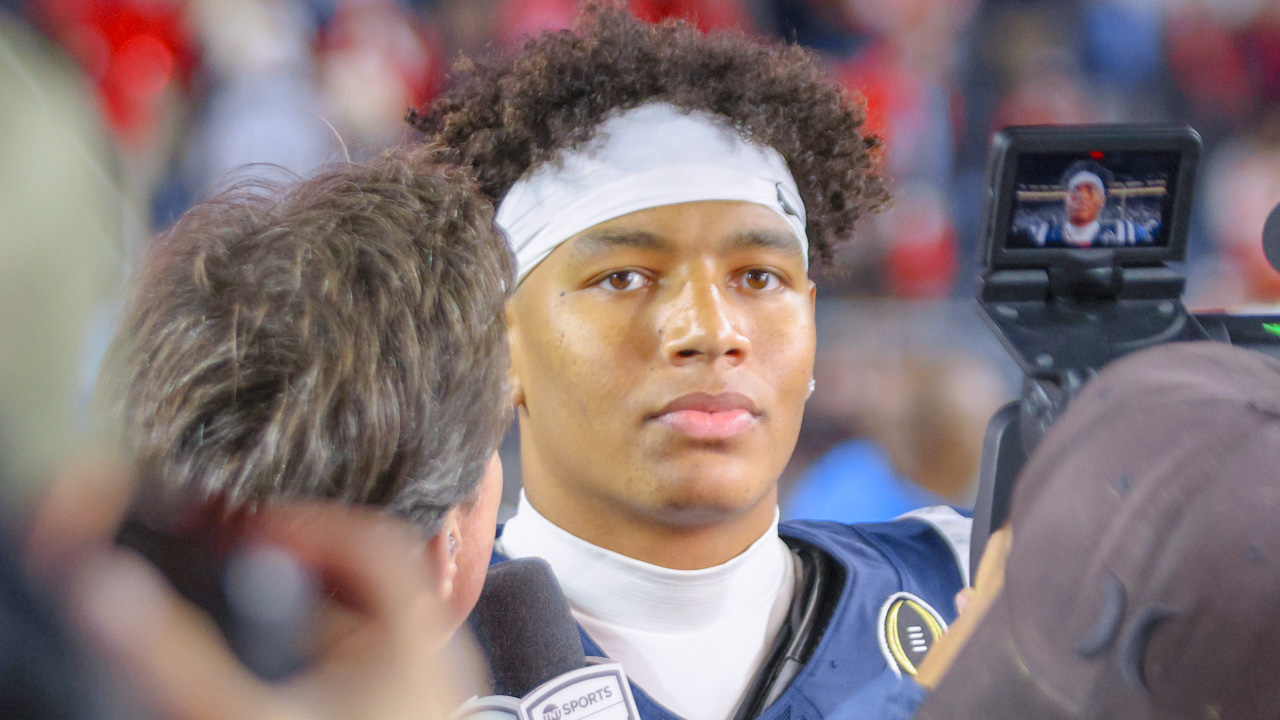
Ole Miss quarterback Trinidad Chambliss was one of the best stories of the season.
Chambliss went from leading Ferris State to a Division II national championship to leading Ole Miss to a College Football semifinal game in the year. He conquered a lot of hurdles and opponents to get there. He’s now officially looking to defeat another opponent.
Chambliss and his attorney, Tom Mars, filed a lawsuit against the NCAA in Mississippi state court at 4:03 p.m. Friday. It’s a petition for preliminary and permanent injunctive relief and declaratory judgment.
For those unfamiliar with legalese, Chambliss is asking a state court (that’s an important part) to force the NCAA into allowing Chambliss to play in 2026.
This is the lawsuit we were expecting, but Chambliss has also filed an appeal to the NCAA’s decision that will reportedly be heard next week.
Now the question becomes whether or not Chambliss is successful on either front.
Will Chambliss be the Rebels’ starting quarterback in 2026?
It looks a lot like he will because of only one reason: the lawsuit was filed in state court on contractual grounds rather than in a federal court on antitrust grounds.
A lawsuit involving the starting quarterback of Ole Miss, home to the largest law school in the state, asking to be allowed to play one more year? All it would take is having an Ole Miss alumnus as the judge that is a football fan.
On the surface, there appears to be enough evidence to support the first criteria for a preliminary injunction, which is the plaintiff is likely to succeed based on the merits of the case.
The petition details Chambliss having issues with enlarged tonsils following bouts of mononucleosis. It claims that airway obstruction caused by the condition hampered Chambliss’ ability to play early in his career at Ferris State.
Ferris State didn’t seek a medical redshirt for Chambliss that 2022 season, which was the reason the NCAA cited for not granting the initial waiver request.
One point Chambliss’ attorneys point is that the waiver rules are different for Division II than for Division I. That complicates the case exponentially (but that’s the NCAA’s problem/fault, not any player’s).
Final Thought
The injunction petition and appeal are the final Hail Mary attempts at getting Chambliss another year of eligibility.
The appeal is a crapshoot. It’s the NCAA after all.
The lawsuit route offers the most hope because, right or wrong, all they need is the right judge to hear the case.