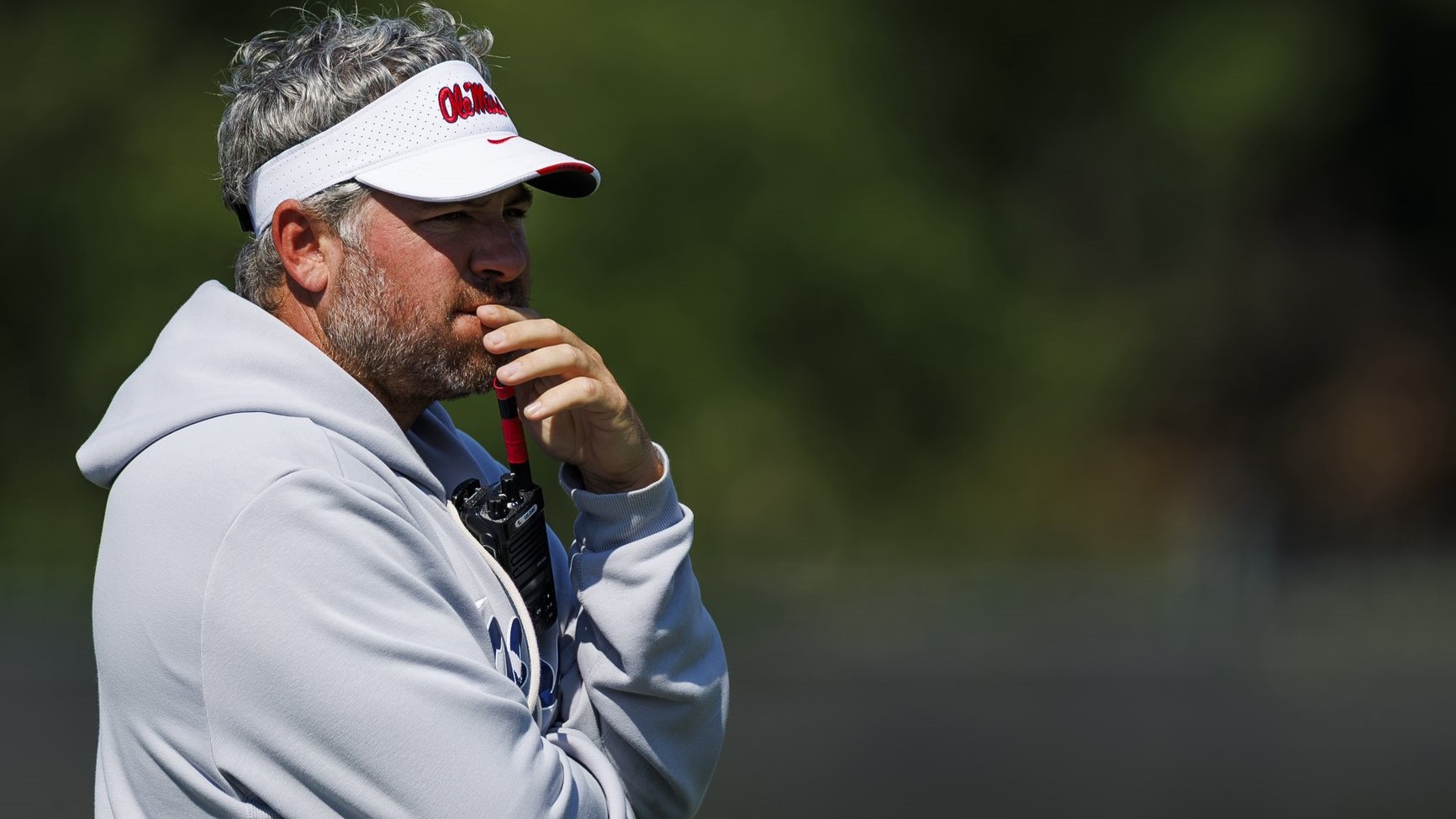
Pete Golding spent a good chunk of his first fall camp press conference talking about anxiety. Not in the way most coaches do, with vague references to pressure or expectations.
He talked about it like a coach who has seen every version of a player’s nerves and knows exactly where they come from. In his mind, anxiety isn’t a mystery. It’s a symptom.
“Guys get nervous and anxious when they aren’t prepared,” Golding said after the Rebels’ first preseason practice Thursday.
That line tells you a lot about how he plans to run this team. Ole Miss isn’t trying to eliminate nerves. Instead it’s trying to eliminate the reasons for them.
Preparation over panic
Golding’s message was simple. When players work, study, communicate and grind Monday through Friday, the nerves they feel on Saturday turn into excitement. They aren’t scared of the moment. They’re ready for it.
“It’s not the nervous feeling of, ‘I don’t know what’s going to happen,’” he said. “When you make Monday through Friday much harder than Saturday, some of that anxiety is relieved.”
That’s the core of his philosophy. Anxiety isn’t something you treat. It’s something you prevent.
Creating adversity on purpose
Golding wants camp to be uncomfortable. He wants players to be put on the spot, called up in front of the team, thrown into one‑on‑one situations, and forced to respond when they get beat.
And he made it clear that getting beat is part of the plan.
“You’re going to miss a tackle. You’re going to drop a ball. You’re going to throw a pick. It’s going to happen,” Golding said. “The greatest players in the world have done it. How are you going to respond?”
Ole Miss isn’t building a roster that expects perfection. They’re building one that expects resilience.
Golding said he doesn’t hear much about anxiety from true competitors. What he does want to hear more of is urgency. Attention to detail. Communication. Playbook mastery. That’s where he thinks this team still needs to grow.
“We’re definitely not where we need to be,” he said. “We have a lot of work to do, and that needs to pick up a little bit, in my opinion.”
It’s a reminder that experience alone doesn’t solve anything.
Ole Miss has older players, transfers who have played in big stadiums, and a roster that shouldn’t be wide‑eyed. But maturity isn’t the same as preparation.
The message behind the message
Golding’s answer to being asked about anxiety wasn’t about sports psychology.
It was about accountability. It was about building a team that doesn’t flinch when the lights get bright because they’ve already been through something harder.
It was also a window into how he sees the season. Ole Miss isn’t trying to avoid adversity. They’re trying to rehearse it.
If Golding gets what he wants, the Rebels won’t be talking about anxiety in November. They’ll be talking about how to celebrate a championship.