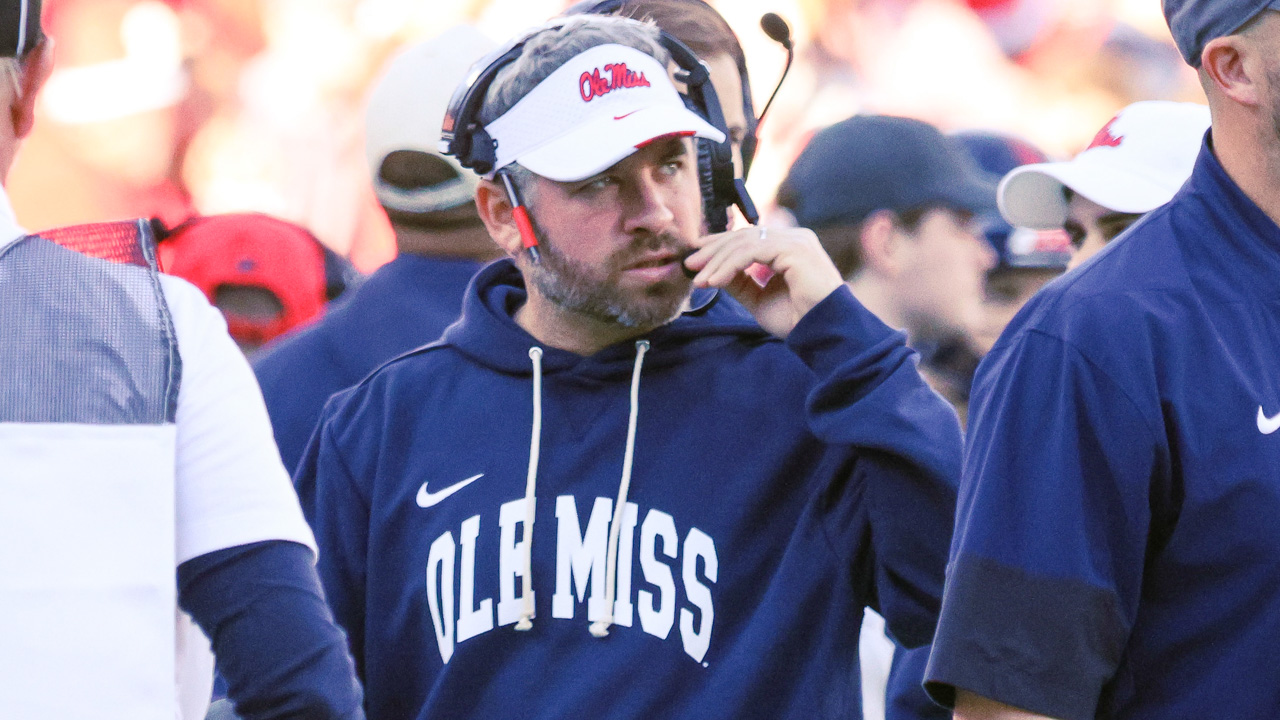
Ole Miss didn’t just make David Gabriel Georges’ top list: it belonged there.
When the No. 2 running back in the country released his top eight schools, the Rebels were listed alongside Ohio State, Georgia, Alabama, Texas, Tennessee, Auburn and Miami.
That isn’t a “nice story” inclusion. That’s a signal. Those are the programs that live in the deep end of the recruiting pool every single cycle, and Ole Miss is swimming right next to them.
For a long time, Rebel fans have been conditioned to treat lists like this with skepticism. Being included was often the ceiling, not the beginning of a real fight. But this one feels different, and not just because of the name recognition attached to Georges.
It’s because Ole Miss is no longer showing up as the novelty; it’s showing up as a peer.
That’s why LSU’s late entry into the “Gabriel Georges Sweepstakes” matters. The Tigers didn’t just randomly decide to offer one of the nation’s top backs.
They did so because Kevin Smith, Ole Miss’ former running backs coach and Georges’ primary recruiter in Oxford, understands exactly how real the Rebels’ position is. Smith knows the pitch. He knows the relationships. And perhaps most importantly, he knows Ole Miss is a legitimate threat.
You don’t counter a program you don’t respect.
For Ole Miss, this moment is about more than one five-star running back. It’s about context. The Rebels are consistently in rooms with Alabama and Georgia now. They’re battling Ohio State and Texas for elite skill players. They’re no longer hoping to catch lightning in a bottle — they’re building a résumé that makes top recruits listen before the conversation even starts.
Lane Kiffin has changed the perception of what Ole Miss can be. NIL infrastructure, modern offensive identity, NFL development and national relevance have turned Oxford into a destination instead of a fallback.
When elite recruits look at Ole Miss now, they don’t see a stepping stone. They see opportunity with exposure.
That’s how programs make the jump from “dangerous” to “established.”
Ole Miss isn’t fully there yet. The Alabamas and Georgias of the world didn’t get where they are overnight.
But when the Rebels are routinely mentioned in the same breath as college football’s blue bloods, that gap gets smaller every cycle.
Gabriel Georges may or may not end up in Oxford. That’s almost beside the point.
What matters is that Ole Miss is firmly in the fight and everyone involved knows it. When powerhouse programs feel the need to counter, to pivot, to protect territory, it’s proof of progress.
Ole Miss is no longer knocking on the door.
It’s standing on the porch, waiting for it to swing open.