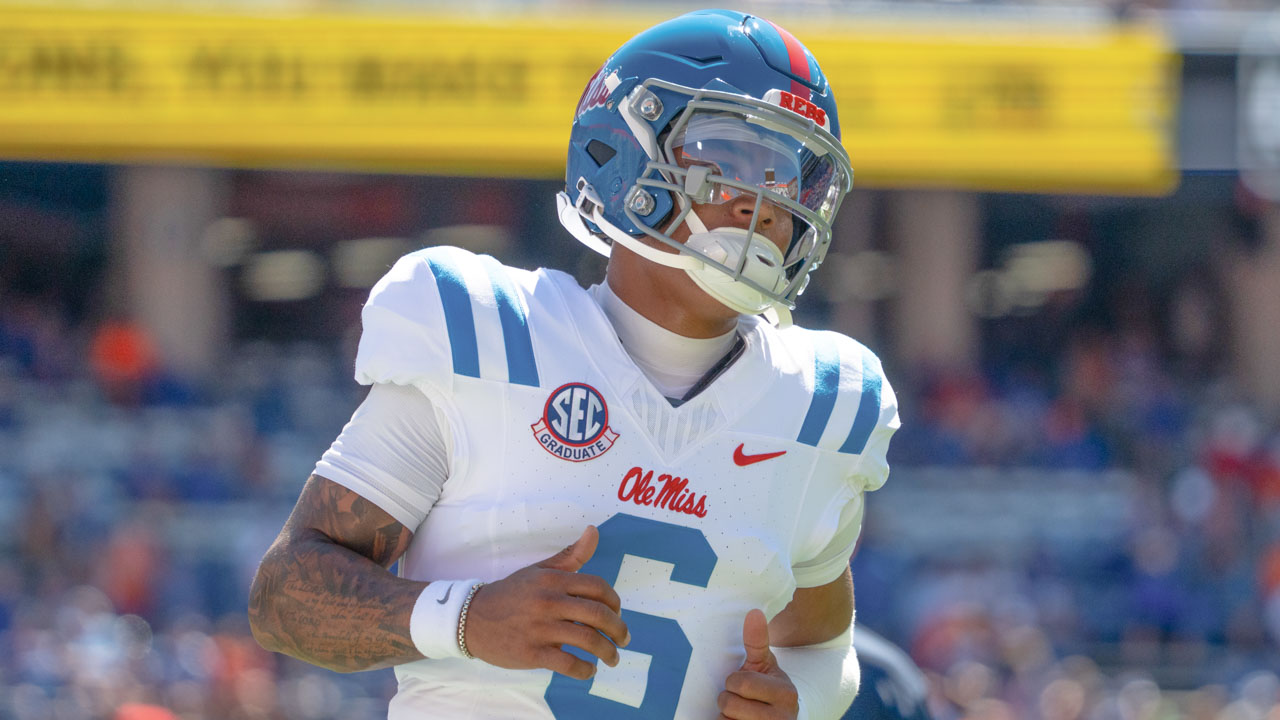
Ole Miss eventually found its offensive rhythm in Gainesville.
It just happened about 30 minutes too late. By the time the offense started moving the ball, Florida had already taken control, and the Rebels never got the defensive stops they needed to turn a surge into a comeback.
The first half was the problem.
Ole Miss opened the night with 49 yards in the first quarter, only 11 plays and two first downs. No points. Florida had 126 yards and seven first downs in that same span and led 10-0 before Ole Miss ever settled in.
The Rebels didn’t score until Lucas Carneiro’s field goal with 10:13 left in the second quarter, and their only other first‑half points came on another field goal with just over a minute remaining.
By halftime, Ole Miss had 148 yards, nine first downs and an 0-for-5 mark on third down. That’s not just a slow start. That’s a start that forces you to chase the game the rest of the night.
Trinidad Chambliss said the opening drive set the tone.
“We had a slow start offensively in the first half,” he said. “We went for it on fourth-and-1, playing aggressively. That definitely hurt because I feel like we would have scored on that drive.”
Everything changed after the break.
Ole Miss gained 161 yards in the third quarter alone, more than it had in the entire first half.
The Rebels picked up 11 first downs in that quarter, more than the entire first half. They went 4-for-5 on third down after going 0-for-5 before halftime. The passing game opened up. Chambliss went from 88 first‑half passing yards to 192 by the end of the third quarter. Deuce Alexander ripped off a 49-yard catch. The offense finally looked like the offense.
By the end of the night, Ole Miss had 278 second‑half yards, averaged 8.2 yards per play and scored three touchdowns. The first two drives after halftime both ended in the end zone. The Rebels went 4-for-6 on third down after halftime. Their final six possessions produced three touchdowns.
Everything that didn’t work early suddenly worked.
Pete Golding said the turnaround was obvious.
“I felt like it was about as bad of a first half as you could potentially have,” he said. “We go out in the second half, score on the first possession and get it down to three points. At that point, you feel good, and we just could never get a stop on defense or string them together.”
That’s the part that defined the night. The offense finally had answers, but the defense never gave it a chance to matter.
Florida kept running, kept breaking tackles and kept turning routine plays into chunk gains. Every time Ole Miss scored, Florida responded with something easier.
Golding admitted he got aggressive trying to force a stop, calling some all‑or‑nothing looks that turned into explosives. He also said none of Florida’s run game was a surprise. Ole Miss saw it on tape. Ole Miss prepared for it. Ole Miss didn’t execute.
Chambliss said the second‑half surge came too late. Golding said the defense never gave the offense a chance. Both were right.
Ole Miss showed in the second half that it can move the ball, create explosives and score in bunches. It also showed in the first half that slow starts can bury you in this league. And on Saturday, the defense made sure the offense’s comeback never had a chance to become anything more than a brief spark.
The gap between the two halves was huge. The gap between what Ole Miss needed and what it got was even bigger.